Monday, February 10, 2014

February 1st Week part B

February 6 -All about Penguins

We got off to a slow start this morning because I became a grandma for the first time on Tuesday evening. So ... I had some pictures to share and the students and mom wanted to see the pictures. We lost about 20 minutes of time while we shared pictures and information.


 I simply love teaching children. My students were perfectly happy as we started the morning doing puzzles and turning in their homework.


As soon as I told them that we would be talking about penguins, they both needed a sweatshirt on because they were cold.


They really get into the topic of Penguins as we learned "The Penguin Song", found at http://www.dltk-teach.com/t.asp?b=m&t=http://www.dltk-teach.com/rhymes/penguin/penguinsong_sheetmusic.gif. We also started working on a new concept, labeling, so


 I had drawn a penguin on the white board along with a list of the things we needed to identify. The students are very good at copying letters so I am trying to give them more purposeful writing. They took turns "reading" a word on the list and deciding what part of the penguin it would identify. 


As we finished labeling the penguin we played Penguin Pile-up by Ravensburger. It is a great game of strategy that requires fine motor control to place the penguins on the iceberg without making any of the other penguins fall off.


When it was time for snack, we waddled like a penguin to the bathroom to wash our hands. It was very difficult to walk like a penguin up the stairs, so we changed back into people and climbed the stairs.

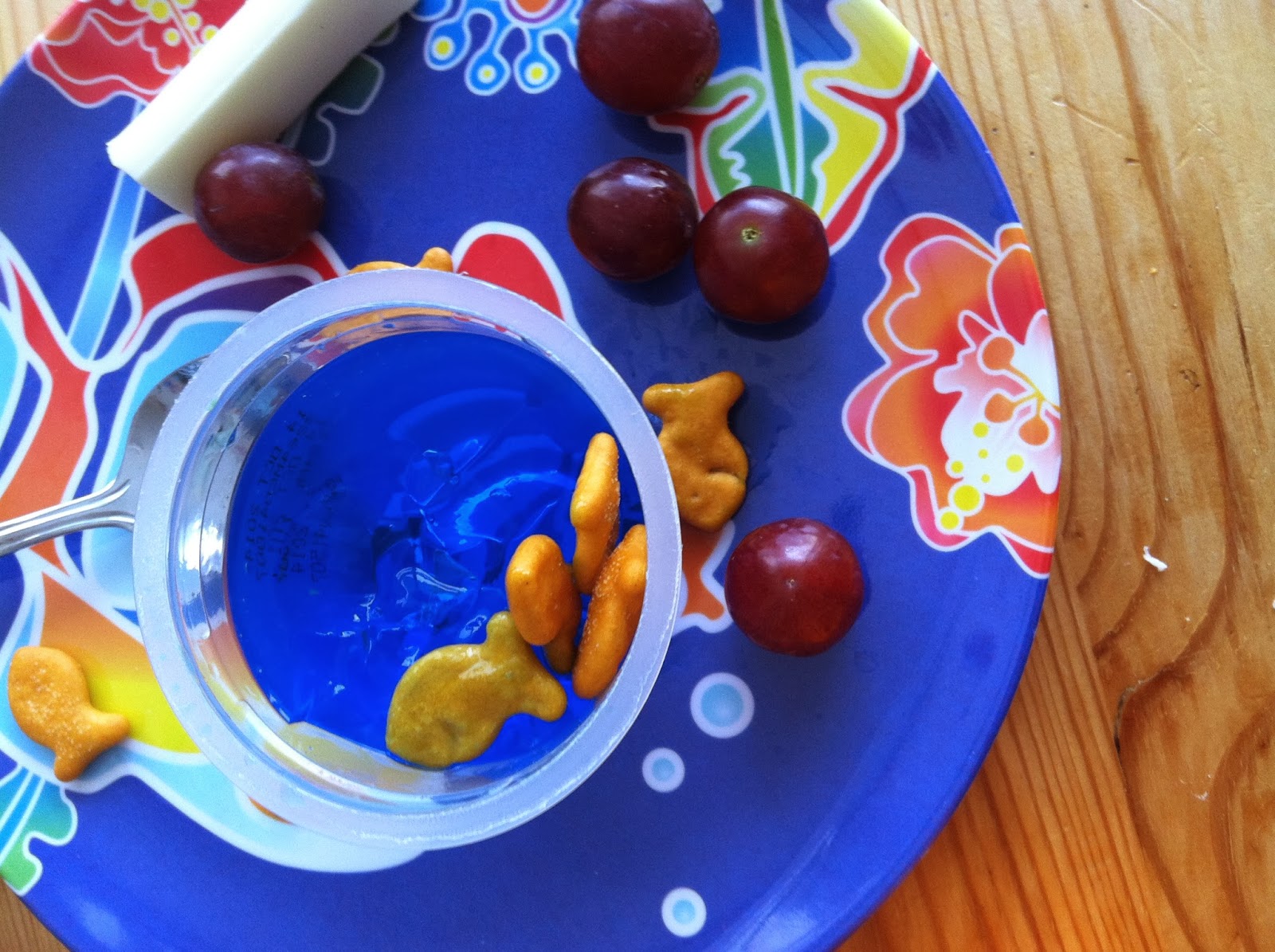

Snack was a a beautiful penguin wonderland. We made a penguin from part of a cheese stick for the body, a grape cut in half for the flippers, a grape for the head, and a bit of carrot for his beak. Our penguin had lots of gold fish to eat and a blue jello cup for swimming. As it turns out the penguin just watched as the gold fish tried to swim in the jello cup.


The Arctic chill continued so we stayed inside and tried to better understand the life of a penguin. We tied pillows to the students' stomachs and then used a small ball to represent a penguin egg. The egg was placed on the penguin's feet and the pillow stomach was pushed down to keep the egg warm. With the pillow it made it easier to understand why penguins waddle and not walk like we do. There is no place for them to bend knees if they had them.


Our eggs hatched into stuffed animals that we kept warm under our pillow (blubber). We tried to slide on the floor on our stomachs like penguins. It didn't work very well on the carpet so they crawled as best they could around the pillow. Next time I will suggest that we slide on the kitchen tile to see if the we could slide better without the friction of the carpet. Besides the tile surface would be more closely resemble the surface of ice.

We did a quick science experiment, we rubbed some shortening on the back of one hand to see how a penguin's waterproof feathers help to keep the freezing cold water away from their bodies. We put both of our hands in water and took them out. The water on the hand rubbed with shortening the water slid right off. Whereas, the water on the other hand the water stayed on the surface for a while  until we shook it off.


We recorded our discovery in our Science journals. We already knew that blubber and huddling together would keep the penguins warm. We added all three items to our penguin fact sheet.


To finish off the day we worked on our numbers. We filled in the missing number on our penguin number cards. Penguin number cards from sommerpride.blogspot.com.

Homework was an ABC dot-to-dot penguin,from http://www.coloring.ws/t.asp?b=m&t=http://www.coloring.ws/animals/penguins/15.gif; an Itsy Bitsy Penguin Book, from www.kidzone.ws; and Parts of a Penguin worksheet I created.

February 1st Week part A

February 4 - Groundhog Day Celebration

Happy Groundhog Day!!


Today was another day of celebration. Last Thursday we celebrated Chinese New Year (as a reminder we reviewed our Chinese numbers, 1-10) and today we will celebrate Groundhog's Day by learning about why we celebrate it and why it is important. We talked about how the tradition started in Europe and was brought to the United States by the German immigrants to Pennsylvania. Of course we had to find Germany and Pennsylvania on our meeting rug. The students were especially interested to learn that our son Jeff was born in Germany. I like to share little facts to make our learning more personal.
 
We learned a couple of fun words Punxsutawaney Phil and Gobbler's Knob. Punxsutawaney Phil is the name of the very large ground hog who tells if there will be more winter or if we will have an early spring. We watched a short video about this years' groundhog day happenings at http://www.youtube.com/watch?v=HEOH0GOt-PI. We watched as he saw his shadow (which he does about 90% of the time) and they read his prediction to the very large crowd of people. Gobbler's Knob, especially funny words to the students, is the name of the town where Phil lives.


Math was a bit challenging at first, we used toothpicks to help us count the sides of 6 different shapes. We recorded our results in our Math Journals. It was difficult because I had not explained our purpose as clearly as I had thought. The students thought that we needed to cover the whole side of the shape with a toothpick, and they wanted to break toothpicks into smaller pieces to cover the lines completely. As soon as I explained that they only were using the toothpicks to count the sides and not measure them, the activity went very smoothly. As they were finishing up one student noticed that the circle had been forgotten. We had a quick lesson (where I asked leading questions to help her figure out) that a circle has no straight sides to be counted.


There was a lot of hard brain work done in learning about Groundhog's Day and the number of sides to shapes and we were ready for a snack. We tore apart some chocolate cookies,

and scraped off the frosting in the middle.


We crushed the cookies until they looked like fine dirt (we used the food processor to make quick work of it).


To make our own Gobbler's Knob we put chocolate pudding into our dessert dish (Phil's tree), sprinkled dirt (cookie crumbs) on top, added an animal cracker (Phil), and sprinkled the frosting around the plate for snow (along with some Honeycomb cereal for falling snowflakes) to complete the scene. We also added some carrot sticks for Phil, but we were so hungry that we ate the carrots too.  This was a messy snack but very enjoyable. We drank milk to wash down our snack.


We have had an Arctic chill in the area and the weather was a frigid -1 degrees, so we stayed inside. We used our stretchy bands and started out making different geometric shapes,


silly faces


and ended by dancing to some classic rock and roll on the radio.


To keep using the energy we had built up, we made a  cute little groundhog pop-up puppet, idea came from http://kiboomukidssongs.com/groundhog-paper-plate-craft/. We folded the paper plate in half, cut out a small hole in the center for the straw, colored the plate brown with white snow on top, cut out the groundhog out of brown paper, glued it to a straw, and added the words to a song on the front of the paper plate.

We put or craft together and watched a video at http://www.youtube.com/watch?v=3CVqzpqBJx0 (the song starts at 50, but has a cute intro) and learned the song as we played with our puppet. The song is very short and easy to learn.


To finish off the day we used our letter tiles and made words. We are working hard to match the Capital letters on the tiles to the lower case letters on our picture cards. We are learning to use the alphabet line on the wall to figure out which letters go together.

Homework was a dot to dot Groundhog picture from preschoolalphabet.blogspot.com/2012/01/groundhogs-day-fun.html, "Was Punxsutawney Phil's Prediction correct?" chart (they are to chart the temperature and weather for the next six weeks), and a Shadow Moves activity found at http://www.preschool-plan-it.com/ground-hog-day.html#ScienceActivities under Music and movement.

Monday, February 3, 2014

January 4th Week part 2

January 30 - Celebrating Chinese New Year

Today was an exciting day because we learned a little about China and how they celebrate the new year.
  

Gong Hei Fat Choy

This is the traditional greeting for Chinese New Year. Literally translated "Gong Hei" means congratulations and "Fat Choy" means to have prosperity. We learned this greeting and the response that Chinese children give to family and friends, "Hong bao na lai." or 'May I have the red envelope, please.' The students learned to say it in English rather than Chinese. We practiced by me greeting them in Chinese and they would respond in English. At the end of the day they got their red envelope.


We learned that the Chinese zodiac is different than ours. In China, the zodiac is based on the year that you are born. This year, 2014, is the year of the horse. We talked about how my yet unborn granddaughter would be a 'horse'. I found little booklets at http://www.activityvillage.co.uk/chinese-new-year for each of the zodiac animals. I printed a booklet for each of the students and one for my year so that we could look at them and learn about some of our strengths. We also looked this year's horse booklet and talked about the strengths of the horse. The students were not surprised to learn that their teacher was born in the year of the monkey. It made sense to them, because they tell me regularly that I am very funny.

Since my students were born in 2009, they were born in the year of the ox. I had made up books for the year of the ox and we learned how to write the character since it only 4 strokes. They thought writing in Chinese was so cool.
 
We posted Chinese numbers on our number line and learned to count in Cantonese from 1 to 10.
After learning to count to 10 in Chinese, we needed to prepare the supplies for one of our crafts. 

 
We had some 4" square tissue papers to wad up for our Cherry Blossom trees, and

 rather than just wadding up the paper (so boring) we listened to Chinese music and danced around the room while we wadded the tissue paper. 

We watched a short Dragon Dance on you tube, http://www.youtube.com/watch?v=4WUnWPpRslM. We listened to the music and noticed that they mostly used drums and "clangers" (symbols) to make the music. Watching a dragon dance on video was fun but making our own dragon dance sounded like fun. 
 
So we colored a dragon head and tail to make our own dragon. The hard part was trying to decide if we should cut out the dragon fire along with the head or not. In the end the fire was cut off so no one would get burned.


We needed a flexible body, we had a 3" x 18" piece of paper to use for the body. It was rather stiff so we brain stormed and came up with the idea to fan (according) fold it to make it more movable. 
 

Fan folding was a little more difficult than we had thought and the paper was not folded perfectly, but it worked beautifully. 

We glued the body to the head and tail and also glued tongue depressors to the head and tail also.


While the dragons dried we took time to make some fortune cookies from cupcake liners. Idea came from http://spoonful.com/crafts/paper-fortune-cookies. As you can see our fortune cookies weren't quite as beautiful.

All that crafting, we had worked up a big appetite, we were hungry enough to eat a horse.So made horses and ate them for snacks. 


We created our horses from Town House crackers, banana slices, peanut butter, and cut jelly beans for the eyes and nostrils. Idea came from http://www.pinterest.com/pin/76139049924318683/ Horses by them selves would have been kind of dry so we added yogurt and apple juice to our snack. 

Product DetailsProduct Details


During snack I read two books "My First Chinese New Year" by Karen Katz and "Happy New Year!: Kung-hsi ta-ts'ai" by Demi. We learned about some of the traditions that go with Chinese New Year.


After snack we watched the Dragon dance video again and danced with our dragons. Fifty-eight seconds was not enough time for our dragon dance; so, we found a dragon dance that was just over 8 minutes and we danced our dragons till the teacher just about dropped. I was so involved in dancing with my dragon that I forgot to take pictures. We also took out the symbols and Chinese drum and played along with the music. We practiced listening to and following the rhythm.


To rest we made our last two craft projects. We used our wadded up tissue paper balls to make a Cherry Blossom Tree (instructions found at http://www.activityvillage.co.uk/blossom-tree-collage). We made a wiggly glue line across our paper and glued a piece of brown string to it for the trunk and branches of our tree. It was a tricky bit of fun to get the yarn to stick to the paper and not to our fingers. Next we placed dots of glue near our branches and placed the tissue paper balls on the glue for a very cute Cherry Blossom Tree.


We needed to get some fine motor skills in so we cut paper and made Chinese lanterns. We had learned that the New Year Parade could last into the evening and that children carried lanterns in stead of flashlights. Just before going home with their fortune cookies for their families, their dragons, and their Cherry Blossom pictures; I said "Gong Hei Fat Choy"  to each one and if they asked for their red envelope, I gave them a red envelope with a piece of Werther's gold wrapped candy (I would have rather given them a chocolate coin but I couldn't find them). They were so excited to finally get their envelope and surprise. All in all it was a really fun day.

Homework was a science project making firecrackers in a jar (https://www.giftofcuriosity.com/easy-to-make-fireworks-in-a-jar/), a math project doing a survey of people to see if they thought the groundhog would see his shadow (2teachingmommies2012.com), and a book buddy bag.

Tuesday, January 28, 2014

Week 4 Part 1

January 28 - The Mitten

After a stressful weekend, it was wonderful to be with four year olds; their simple outlook on life is so refreshing. Our focus for today was the book "The Mitten" by Jan Brett. Vocabulary words were moles burrow, hedgehog snuffles, owl swoops, bear lumbers, and mouse wriggles. These are the words in the song so we created actions to help with memory. Burrow was something like a dog paddle, snuffles we twitched our noses, swoops our hand swooped in front of us, lumbers we moved our shoulders slowly like our shoulders were trying to walk, and wriggles we mad our bodies squirm.
Product Details
It is a delightfully predictable story that is easy for children to retell. We also learned "The Mitten Song" found at  firstgradewow.blogspot.com. All of these song sheets are in our class song book that the students use to sing and re-sing the song we have learned in class.


I downloaded her free song sheet and then added the pictures from Jan Brett's website http://www.janbrett.com/mitten_masks_main.htm. I chose to use the mitten masks pictures so that the pictures would be consistent through out the lesson. We also talked about how important the mittens are in pairs. Pair is another one of our new vocabulary words.

We took a couple of minutes to use the masks to retell the story. We folded our meeting blanket in half to create a mitten to put the animals in. We used the mitten song to help us retell the story.


Next we worked on 'estimation' or as the firstgradewow.blogspot.com. The students had to estimate how many items could be put in the area, the perimeter, along a vertical line, and finally on a horizontal line. To help identify the different ways to measure the mitten, I left the area mitten blank, I highlighted the perimeter of the mitten, and drew straight lines with the highlighter across the mitten for the horizontal measurement, and a highlighted line from the cuff to the tip of the mitten for the vertical measurement. Then we used Honeycomb cereal to measure each item to see if our estimation was correct, close, or way off. They are still learning what estimation is all about and so we had a couple of close guesses and some that were way out there. One student thought that measuring horizontally across the mitten would take 1,000 pieces of cereal. We talked about how many were in the area of the mitten, which was about 25, and if a single line would need more or less pieces of cereal and she was sure that it would need less cereal but still thought that 1,000 was a good estimation anyway. So we went with that answer, the student was surprised that it only took 6 pieces of cereal to cover the horizontal line.


All of our estimations and results were recorded in our new science / math journals. Science opens on one side and you flip it over and the math journal is on the other side. The students were so in love with their new journals they hugged them as they put them away.


While I worked one on one with a student on the estimation activity, my other student worked on making sentences. Using the letter books, from thisreadingmama.com that I have mentioned before, she made sentences with word strips and read the sentences created. We are focusing on our sight words a, the, see, and I.


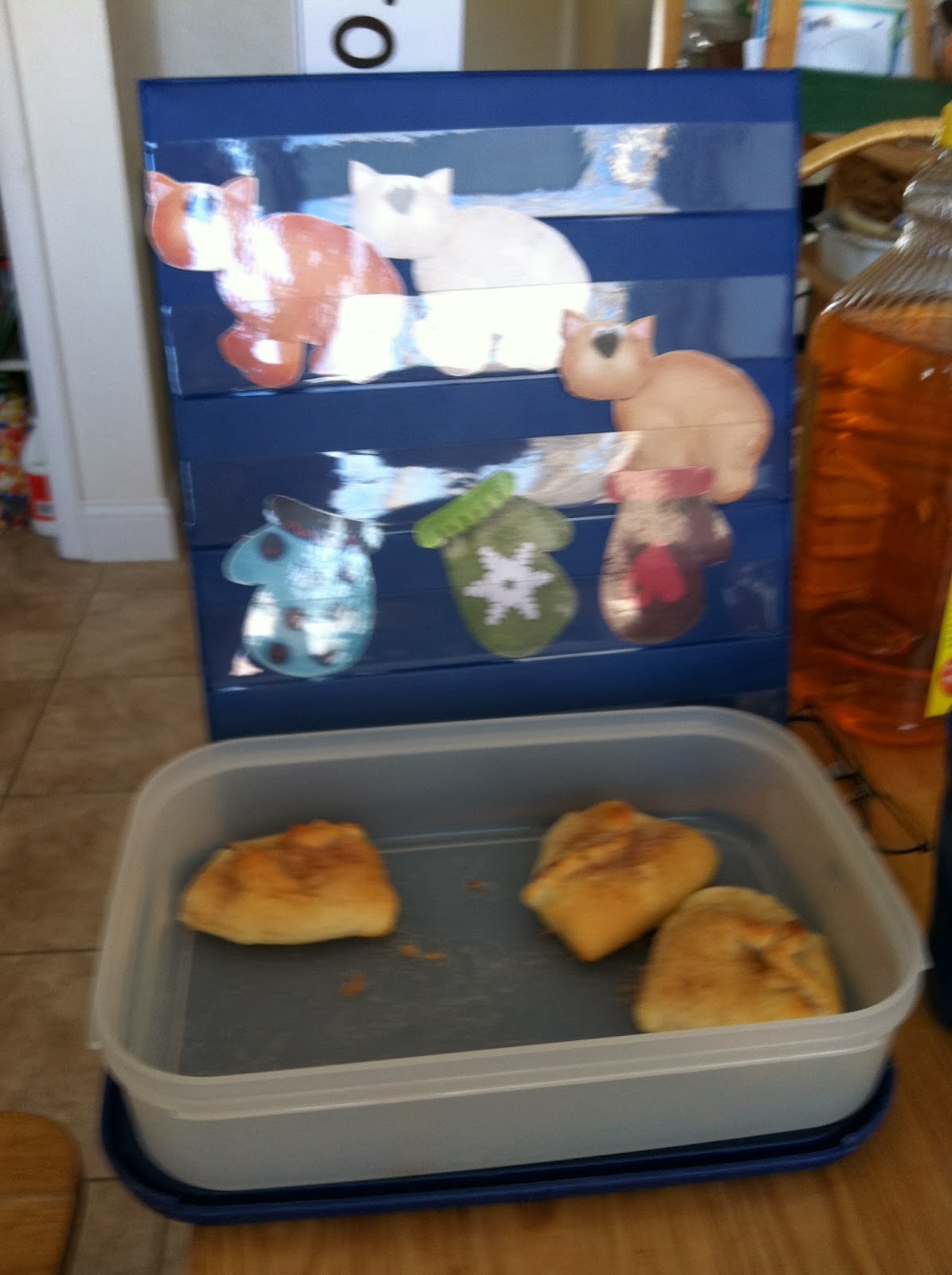
All this hard work made the students hungry. We created mitten pairs for our snack, which ended up being a part of lunch instead. Using seamless croissant dough and a hand/mitten cookie cutter, we cut out 2 mitten shapes and then painted them with food coloring. We only used 4 colors (that is all I had) and that was plenty of choices. Since the cutter only made a right hand and we wanted to have a pair of mittens; we cut out 2 and flipped one over to make the left mitten. Paint brushes accidentally ran into other peoples' hands we reached for more paint and so our hands had interesting markings too. A fun bonus to the activity. Next time I might dilute the food coloring with a little bit of water to minimize the colors on the hands. Although the paint looked really bold and beautiful on the mittens.


While the mittens were baking we had a snack. We had a pair of apple wedges, a pair of carrot sticks, a pair of cheese sticks (actually it was one cheese stick broken in half), yogurt, and apple juice.


As an added treat for working so hard, I told the Three Little Kittens nursery rhyme as a clue for our special treat. They didn't really catch on until I replaced 3 kittens with 2 students retold it:

"Two little students cut out their mittens 
And they began to cry, 
Oh, teacher dear, we sadly fear, 
Our mittens we have cut. 
What! cut out your mittens, you ambitious students! 
Then you shall have some pie. 

Two little students did bake their mittens 
And they began to cry, 
Oh teacher, dear see here see here 
Our mittens we have baked. 
What! You clever little students, you baked your mittens, 
Then you shall have some pie." 

I had made small little cherry pies for them as a special treat. The rhyme wasn't exactly perfect but the girls thought it was funny and a better clue than the Three Little Kittens rhyme.


Ta Da! The finished product. Everyone was button popping proud of their creation. Sadly. we had to let the mittens cool; so took our finished product home to eat with lunch.


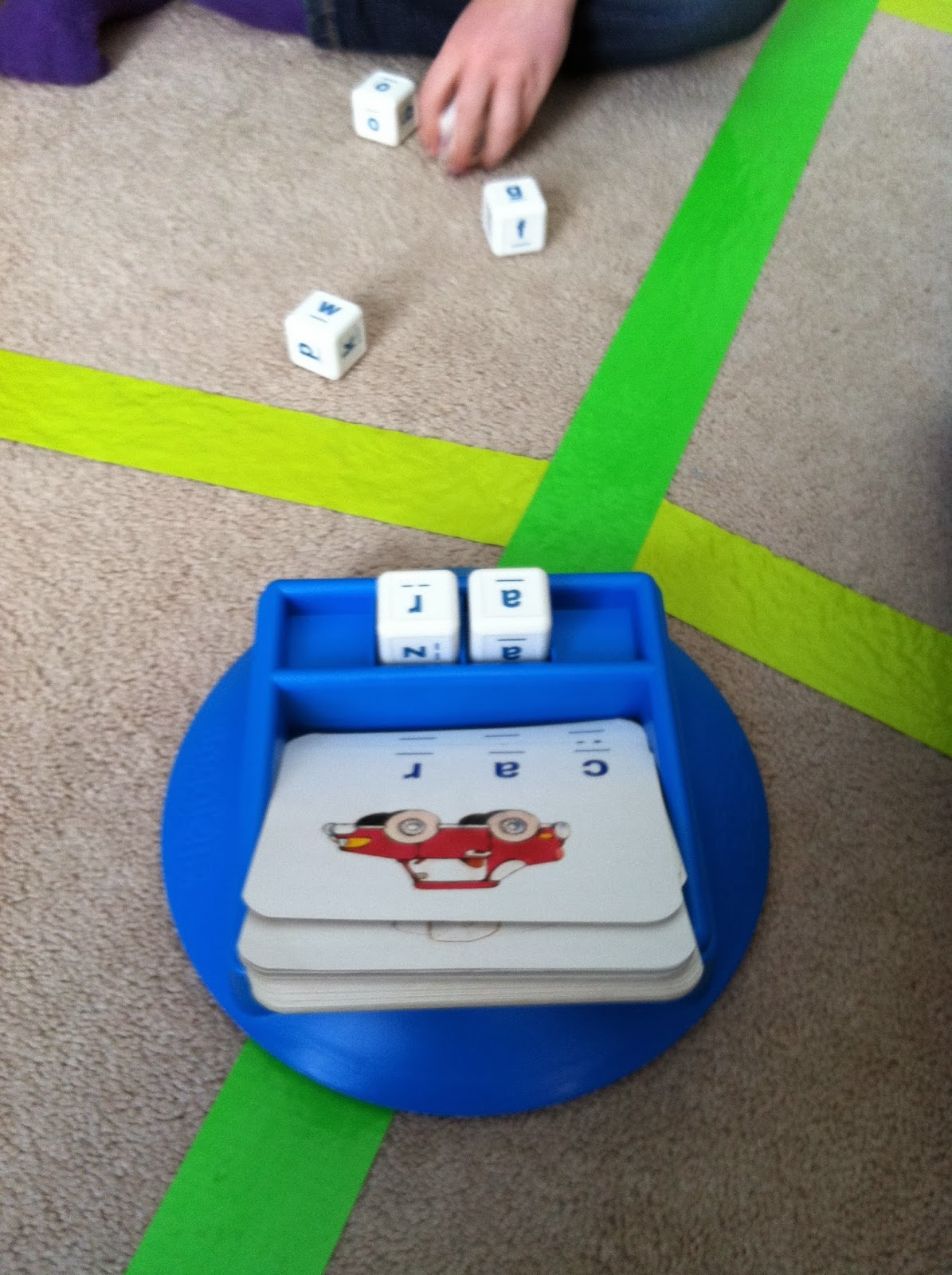
After all this kitchen fun we only had about 15 minutes before school was over so we played a couple of letter games and a rhyming game. First I had made some cards with vocabulary words, that correlated with the book "The Mitten", on them and the students were to match the letters of the word with a letter tile from the game Bananagram. The first time we did this activity the letters on the picture cards were capital letters just like the game tiles, but this time the picture cards had the lower case letters and the student had to recognize the matching upper case letter.


Then we played a couple of rounds of Boggle Jr.. While one student was creating their word the other student and I sang "The Mitten Song." For our last activity, we took turns choosing an object in the room, saying its name, and the rest of us had to think of a word that made a rhyme, real or made up.

Home work is rather simple each student was given a book called "The Cozy Mitten" from kinderalphabet.com and a worksheet where they were to color only the triangles in the picture and discover the hidden picture.